


High-Precision Second-Trimester Surveillance with the Best Fetal Medicine Specialist in Dubai
Consulting with an exceptionally trained, internationally board-certified maternal-fetal medicine expert who is widely recognized as the best fetal medicine specialist in Dubai, such as Dr. Lida Anwari, is a profoundly reassuring, protective, and vital life decision that allows expecting mothers to accurately screen for cervical insufficiency, map out serial transvaginal ultrasound tracking, and implement life-saving structural interventions like a cervical cerclage with absolute clinical precision. The cervix functions as the protective structural gatekeeper of pregnancy, remaining thick, long, and tightly closed throughout the first two trimesters to securely hold the growing baby inside the uterus.
However, when hidden structural vulnerabilities or historical tissue changes cause cervical insufficiency, the cervix can begin to shorten, thin out, and dilate prematurely during the second trimester without any painful contractions or obvious warning signs. Shifting your prenatal milestones into a high-level fetal medicine framework removes all fear and confusion, changing terrifying anatomical risks into a highly organized, predictable, and perfectly managed care plan.
Because internal collagen distributions, prior surgical exposures, and specific uterine pressures express themselves entirely uniquely across every single gestation, template prenatal schedules simply fall short of providing complete safety. Achieving a completely safe, full-term delivery experience demands an advanced, data-backed diagnostic approach that combines high-resolution sonographic surveillance with deep clinical empathy. Let’s look closely at the primary medical and physiological pillars that define cervical length management.
The Biomechanics of Cervical Insufficiency: Tracking Structural Resistance
Successfully protecting your pregnancy from silent second-trimester shifts relies entirely on using high-precision diagnostics to monitor your cervical length long before physical labor symptoms ever have the chance to develop.
By adhering closely to these globally verified medical metrics, your clinical team completely eliminates the dangerous guesswork of high-risk pregnancies, proving why scheduling an evaluation with the best fetal medicine specialist in Dubai is essential to your family’s early third-trimester safety.
“The continuous implementation of standardized transvaginal cervical length screening between 16 and 24 weeks of gestation is essential for the early identification of cervical shortening and the timely deployment of prophylactic or emergency cerclage interventions.”
– Royal College of Obstetricians and Gynaecologists (RCOG)
1. Serial Transvaginal Ultrasound: The Gold Standard for Cervical Length (CL)
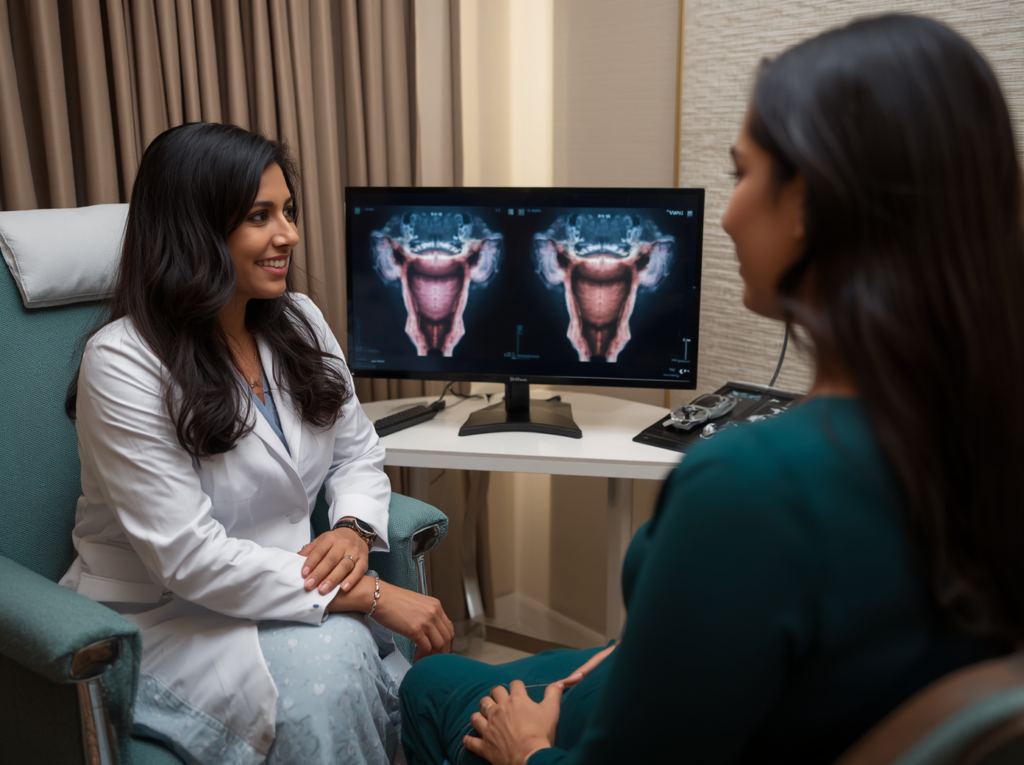
Because structural cervical shortening happens silently beneath the surface, standard abdominal ultrasounds can easily miss early structural changes. Your sub-specialist utilizes advanced, high-resolution transvaginal sonography to achieve millimeter-level accuracy. During this painless scan, your doctor measures the exact internal distance from the internal os to the external os, closely watching for any signs of “funneling”—a dangerous structural shift where the amniotic sac begins to press open the internal top section of the cervix.
2. McDonald vs. Shirodkar Cerclage: The Surgical Splints of Pregnancy
When a cervix drops below the critical threshold of 25 millimeters before week 24, a structural reinforcement known as a cervical cerclage becomes a life-saving intervention. A cerclage is a specialized, high-strength surgical stitch placed completely around the cervix to keep it closed under the weight of your growing baby. A McDonald cerclage uses a secure purse-string suture tied around the outer neck of the cervix, while a Shirodkar cerclage places the stitch submucosally, higher up near the internal os, giving your specialist flexibility based on your exact anatomy.

3. Emergency vs. Prophylactic Interventions: Timing is Everything
The clinical approach to a cerclage is determined by timing and diagnostic indicators. A prophylactic (preventative) cerclage is scheduled calmly around weeks 12 to 14 for mothers with a known medical history of cervical weakness. However, if silent shortening is caught suddenly during a routine scan, an emergency or “rescue” cerclage can be performed even if the cervix has already begun to dilate. This quick clinical intervention holds back the amniotic sac and adds precious weeks to your baby’s development.
Frequently Asked Questions About Cervical Cerclage Care
– Is the placement or removal of a cervical cerclage painful for the mother?
The placement of a custom cervical stitch is carried out under absolute comfort using a light, safe spinal anesthesia in a state-of-the-art operating room, ensuring you feel zero physical discomfort during the quick procedure. Removing the stitch later in your pregnancy is a simple, non-surgical outpatient milestone performed around week 36 or 37 as your body naturally prepares for birth, allowing the best fetal medicine specialist in Dubai to cleanly clear the path for a normal delivery.
– What specialized lifestyle restrictions are enforced after a cerclage is placed?
To ensure the surgical stitch remains entirely uncompromised and free from excess friction, your sub-specialist will design a tailored recovery roadmap. This typically involves practicing pelvic rest (avoiding intercourse), modifying highly strenuous physical workouts or heavy lifting routines, and scheduling regular follow-up ultrasound scans to verify that your cervical tissue boundaries remain beautifully stable, long, and secure.
Also Read: The Roadmap to VBAC – The Science and Safety of Vaginal Birth After Cesarean
Conclusion: Walking Your High-Risk Path with True Medical Peace of Mind
Prioritizing an advanced, data-backed approach to your maternal-fetal wellness is a deeply loving, protective, and empowering commitment that fully preserves your maternal strength, shields your baby’s early development, and brings absolute emotional peace of mind. While addressing a short cervix or navigating the possibility of an operating room procedure can naturally bring up a temporary wave of vulnerability, anchoring your care in modern maternal-fetal science completely removes all fear and confusion. Remember, analyzing your internal tissue parameters early under expert clinical supervision keeps your treatment options straightforward, highly effective, and completely safe.
Dr. Lida Anwari and her premier medical team at Fetal & OBGYN Care are unconditionally dedicated to providing an elite, private environment where world-class maternal-fetal breakthroughs seamlessly blend with genuine human empathy. You do not have to guess your way through second-trimester changes, live with structural anxieties, or manage complex medical statistics in isolation. Taking the first proactive step to consult with the best fetal medicine specialist in Dubai provides you with the ultimate safety, absolute clarity, and customized clinical guidance needed to welcome your baby into the world with complete confidence.